Shopify vs Hostinger comes down to one trade-off: convenience or control. Shopify is an all-in-one ecommerce platform built to get you selling fast, with nothing technical to manage. Hostinger is hosting that gives you WordPress, WooCommerce, and an AI website builder — cheaper and far more flexible, but more hands-on. Here’s the honest breakdown, and which one actually fits you.
IN THIS GUIDE
The 30-second verdict
If you want the fastest, simplest way to launch a store with zero technical work, Shopify is the better option. If you want more freedom, more customization, and a much lower price, Hostinger is the smarter choice — and its AI website builder is a genuine cheap-and-fast middle ground. Here’s the quick version:
| Shopify | Hostinger | |
|---|---|---|
| What it is | All-in-one ecommerce platform | Hosting + WordPress + AI builder |
| Best for | Selling fast, zero tech | Flexibility + low price |
| Ecommerce | Built in, out of the box | AI builder or WooCommerce |
| Ease of use | Simplest path | Builder easy, WordPress more setup |
| Pricing | ~$39/mo all-in | Much cheaper upfront |
| Transaction fees | Yes, unless Shopify Payments | None on Hostinger’s side |
| Free domain | Add separately | Yes (with plan) |
| Control | One clean ecosystem | Build almost anything |
Shopify: built purely to sell
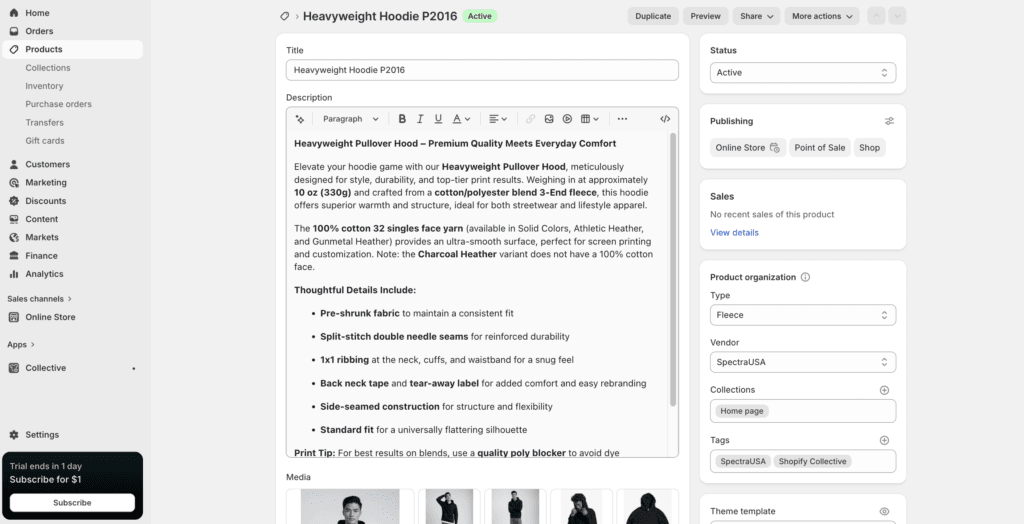
Shopify is designed purely for ecommerce — every button and feature in the dashboard exists to help you sell. You sign up, choose a theme, add your items, connect payments, and your store is ready. You don’t think about servers, you don’t install plugins, and you don’t touch anything technical. If you’re a beginner who just wants to start selling quickly, it’s the simplest path there is.
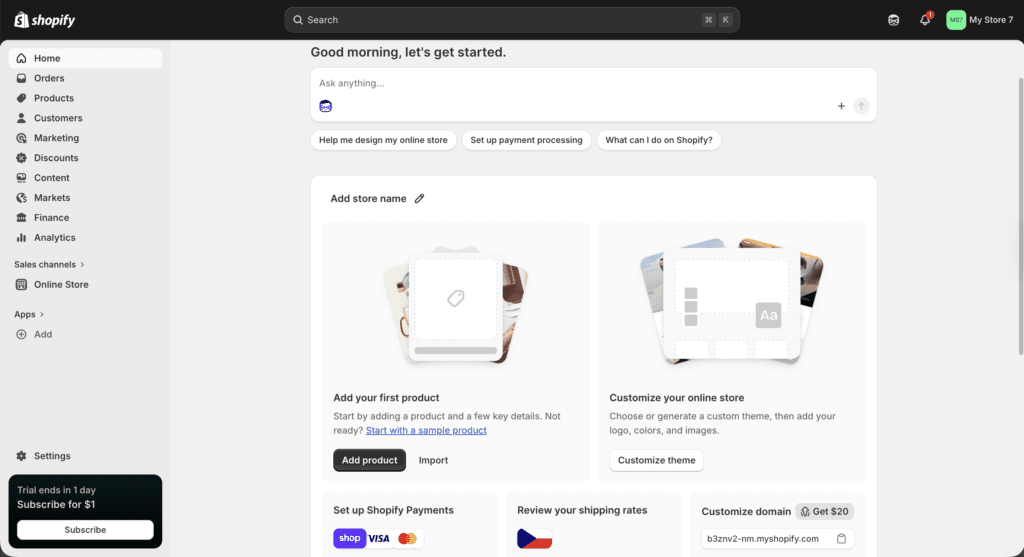
Features are where it shines: built-in inventory management, abandoned-cart recovery, analytics, discount codes, gift cards, unlimited products, and a checkout optimized for conversions. There’s a huge app store to add more — though many Shopify apps cost money, and a few dollars here and there can add up on your monthly bill.
Try Shopify for $1/month
Start on Basic and build your store with the full ecommerce toolkit — 3 days free, then $1/month for 3 months.
Hostinger: control, flexibility and the AI builder
Hostinger takes a different approach. With WordPress and WooCommerce you get much more control — customize everything, choose from thousands of themes, add the exact plugins you want, and build a store that feels unique. The trade-off is time: the full WordPress route takes more patience to set up. It’s not hard, just more hands-on, and you sometimes assemble things yourself.
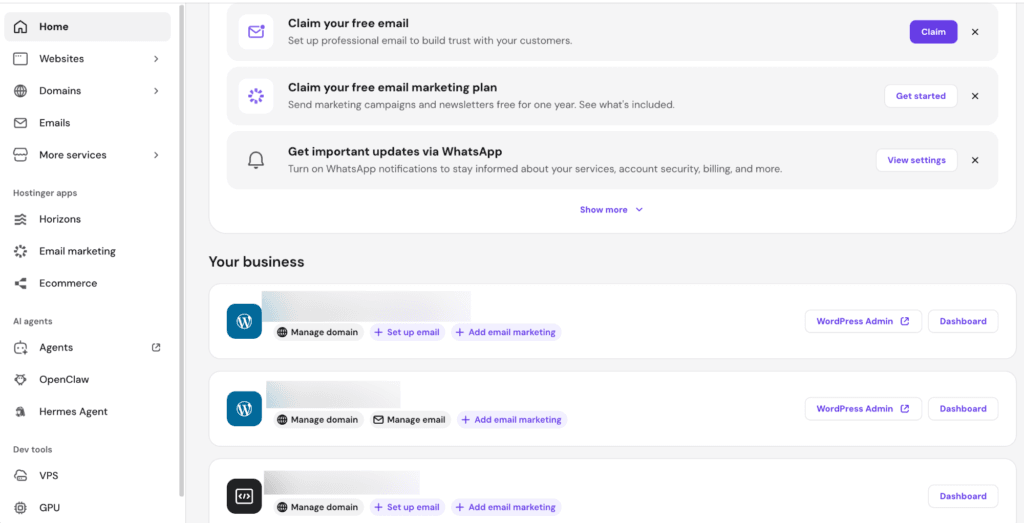
The shortcut is Hostinger’s website builder, which makes setup surprisingly fast thanks to AI tools that generate pages, logos, product text, and images automatically. That AI builder is the real middle ground: cheap, quick, and good enough for a real store, with solid ecommerce, multicurrency, analytics, and SEO built in. So Hostinger gives you the freedom to build almost anything — from a quick AI-made shop to a fully custom WooCommerce store.
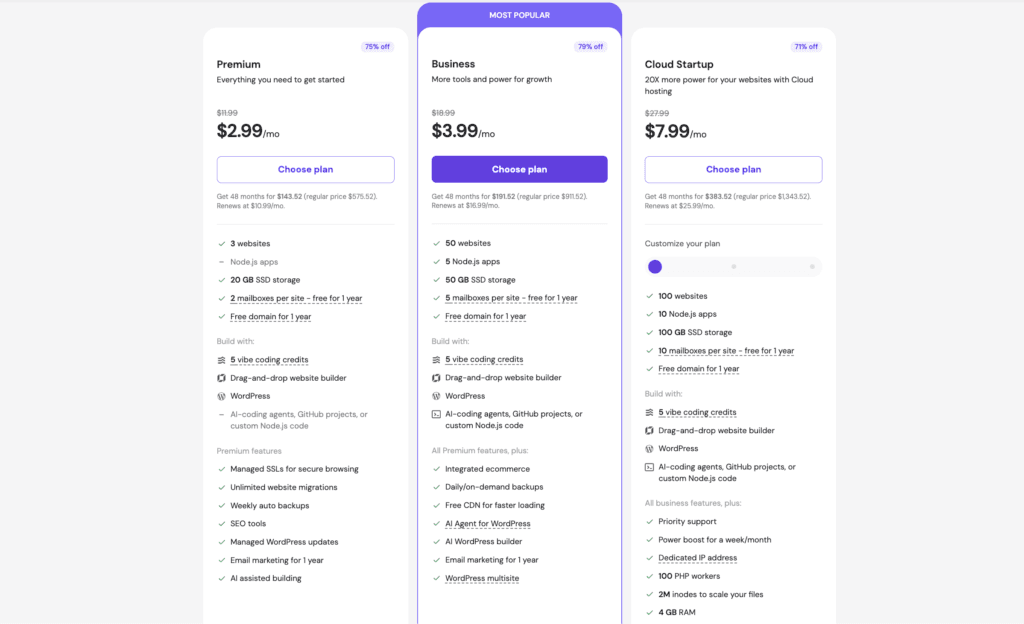
Right now you can get up to 79% off Hostinger plus a free domain and SSL through the link — far below the homepage price. If you’ve settled on a host rather than a store platform, see how it stacks up in Hostinger vs Bluehost, or compare the other store-vs-host matchup in Shopify vs Bluehost.
Get the Hostinger deal
Build a store your way on fast, budget hosting with a free domain — up to 79% off through the link.
Shopify vs WooCommerce: the real ecommerce question
Here’s the nuance most people miss: Hostinger doesn’t have one single “store” product. You sell either through its AI website builder or through WordPress with WooCommerce — the largest plugin collection on the internet, most of it free. So “Shopify vs Hostinger for ecommerce” is really Shopify vs WooCommerce (or vs Hostinger’s builder): one polished all-in-one platform versus a flexible stack you assemble. If you already know WordPress, WooCommerce is powerful and cheap; if you’d rather not manage plugins, Shopify is smoother. Building on WordPress either way? My Shopify vs WordPress guide goes deeper on that side.
Pricing and transaction fees
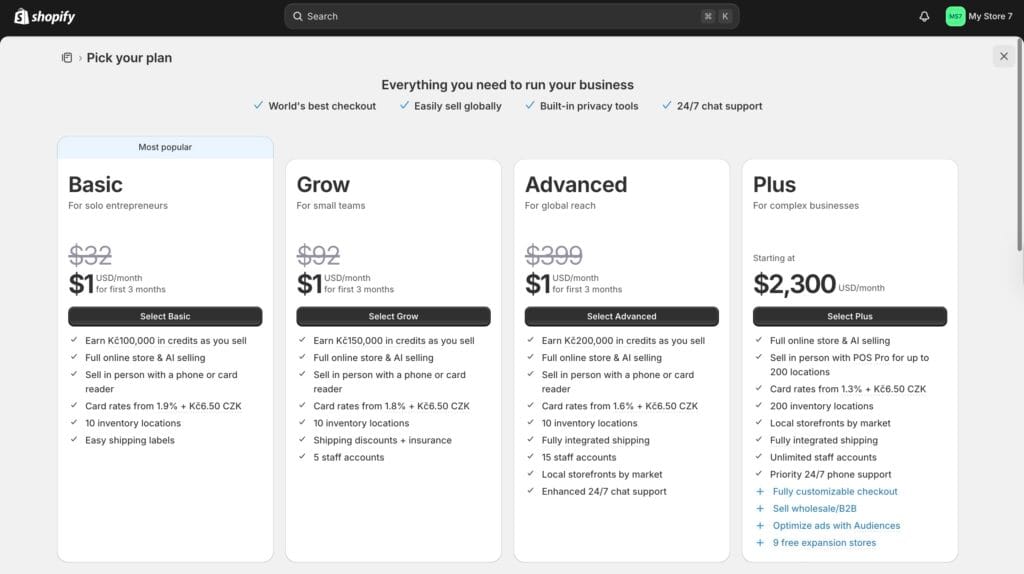
Pricing is the biggest difference. Hostinger is much cheaper upfront — its plans are incredibly affordable, especially through the link — while Shopify’s pricing is simple but higher, starting around $39/month, and the real cost grows as you add apps, themes, and features. There’s another cost people forget: transaction fees. Shopify charges a per-sale fee unless you use Shopify Payments, its native gateway; Hostinger charges none on its side, though your payment provider might. So if you want to save as much as possible, it’s hard to beat Hostinger. If you want the smoothest experience with the least effort, Shopify is worth the higher price. You can see every Shopify tier in my Shopify pricing plans breakdown.
Performance and which to choose
Performance is close. Shopify handles everything for you — fast servers, automatic updates, security, and stability, all behind the scenes. Hostinger is also very fast, especially on its business or cloud plans, but with WordPress you’re responsible for keeping things optimized. It’s not difficult, just something to keep in mind. So which should you use? If you want the fastest, simplest launch with nothing technical, Shopify wins. If you want freedom, customization, and a much lower price, Hostinger is smarter — and the AI builder is the best middle ground for getting online quickly and cheaply.
Which one I’d actually pick
After using both, it comes down to convenience versus control. If you just want to sell and move on, Shopify is the one I’d point most people to — pick a theme, add products, connect payments, and you’re live, no servers or plugins to think about. What surprised me was how far Hostinger’s AI builder closes that gap: describe the site, and it generates pages, text, and images in minutes, for a fraction of the cost. And once you factor in Shopify’s transaction fees and the apps you bolt on, the price gap is bigger than it looks. My honest advice for a beginner: value your time over money, go Shopify; happy to trade a little setup for savings, go Hostinger.
Shopify vs Hostinger: the verdict
So, Shopify or Hostinger? It comes down to what matters more to you: convenience or control. Shopify gives you convenience — the fastest, cleanest path to a working store, with no technical baggage. Hostinger gives you control — more customization, a much lower price, and the AI builder as a fast middle ground if you want a bit of both. Match the tool to what you value. If selling is the plan and you want to test Shopify cheaply first, the Shopify free trial is 3 days free, then $1/month for 3 months.
Start your store on Shopify
3 days free, then $1/month for 3 months — sell online without the setup.
Frequently asked questions
Is Shopify or Hostinger better for ecommerce?
Shopify is better if you want the fastest, simplest store with nothing technical to manage. Hostinger is better if you want more control and a much lower price, building your store with WordPress and WooCommerce or with its AI website builder.
Is Hostinger cheaper than Shopify?
Yes, Hostinger is much cheaper upfront — its plans are among the most affordable available. Shopify costs more (around $39/month) but bundles hosting, SSL, and the ecommerce engine. Compare total cost: Shopify is all-in, while Hostinger’s intro price rises on renewal and you add some pieces yourself.
Can you build an online store on Hostinger?
Yes. You can sell through Hostinger’s AI website builder, which now includes ecommerce, multicurrency, and SEO tools, or through WordPress with WooCommerce for maximum flexibility. Both work well, but they involve more setup than Shopify’s ready-made store.
Hostinger website builder vs Shopify — which is easier?
Hostinger’s AI website builder is a fast, cheap middle ground — it generates pages, text, and images for you and gets a simple store online quickly. Shopify is the more powerful dedicated ecommerce ecosystem with deeper selling tools, but it costs more and is built around a business workflow.
Does Hostinger or Shopify charge transaction fees?
Hostinger charges no transaction fees on its side, though your chosen payment provider may. Shopify charges a per-sale fee unless you use Shopify Payments, its native gateway, which removes Shopify’s own transaction fee.
Related next step
Next: browse more hosting guides, or check the current software deals.