Shopify vs eBay comes down to one trade-off: eBay rents you instant access to millions of buyers but takes a big cut of every sale, while Shopify costs a flat monthly fee and lets you own the store, the data, and the brand. Here’s how the two really compare in 2026 — and who each one suits.
IN THIS GUIDE
The 30-second verdict
Want to build a real brand and a business with resale value? Choose Shopify. Just want to sell a few used, vintage, or collectible items quickly? eBay is great for that. For most people starting a business in 2026, Shopify is the better long-term choice because you own what you build — but eBay genuinely wins when you only want fast sales from an existing crowd.
| Shopify | eBay | |
|---|---|---|
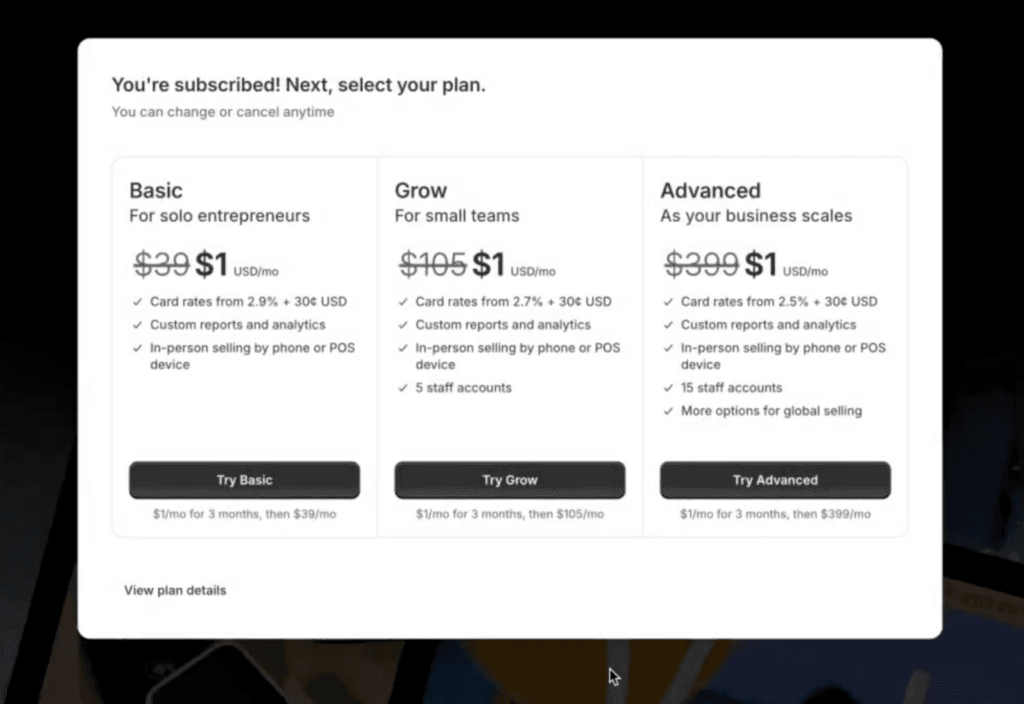
| Cost model | Flat monthly fee (currently $1/mo for 3 months, then about $39/mo on Basic) | About 13.6% of each sale + a small per-order fee |
| Traffic | You drive your own | Built-in marketplace audience |
| Branding & data | You own the store and customer list | Limited — eBay controls the relationship |
| Dropshipping | Built for it | Strict and risky |
| Best for | Building a brand and scaling | Used, vintage, collectibles, quick sales |
Try Shopify for $1/month
Build a branded store you actually own — currently 3 days free, then $1/month for 3 months.
Where Shopify wins
Shopify is built around one idea: the store is yours. That changes everything about how the business grows.
- You own the brand and the store. Full control over design, pricing, and the customer experience — not a shelf inside someone else’s marketplace.
- You own the customer data. Collect emails, run retargeting ads, and build repeat buyers — the foundation of resale value later.
- Lower cut per sale at volume. A flat subscription beats a percentage of every order once you’re selling consistently.
- Built to scale. A huge app ecosystem, 24/7 support, fast hosting, and secure checkout with Shop Pay. New here? Start with our Shopify setup guides.
Where eBay wins
eBay deserves credit for what it does well — and for some sellers it’s the smarter pick.
- Instant traffic. Millions of buyers are already searching — you don’t have to drive your own.
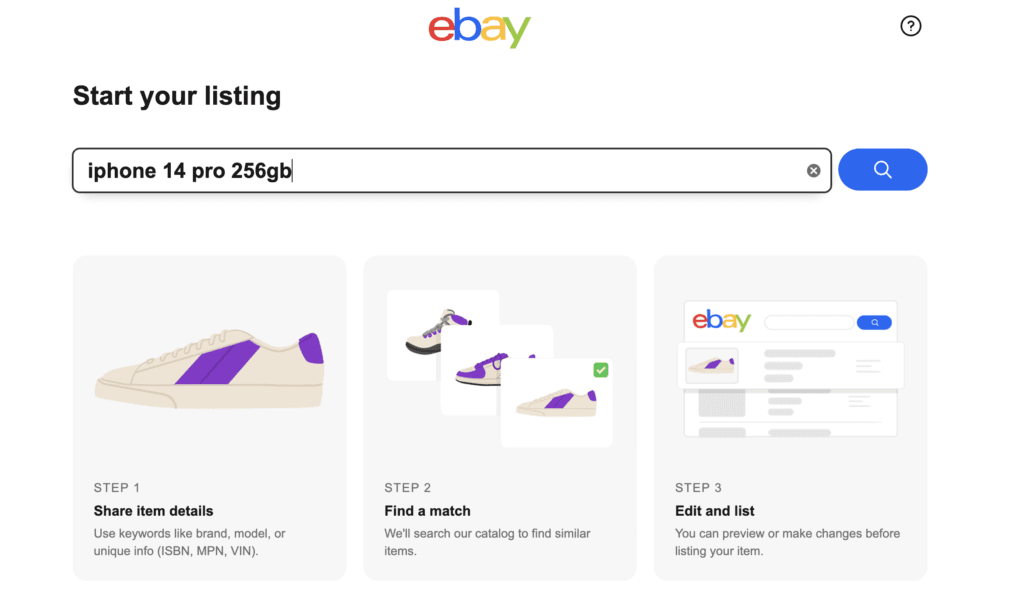
- No website to build. Enter a few item details, match the catalog, and list — you can be selling in minutes.
- Perfect for one-off items. Used goods, vintage finds, and collectibles sell well to eBay’s buyer base.
- Low effort to start. If you only sell occasionally, there’s no monthly fee to justify.
Shopify vs eBay fees and cost over time
This is where the two platforms differ most. eBay takes a cut of every sale — around 13.6% of the item price plus shipping for most categories, plus a small per-order fee (payment processing is now baked into that). Shopify instead charges a fixed monthly subscription plus standard card processing (2.9% + 30¢ on Basic via Shopify Payments, with no extra transaction fee). So eBay’s cost rises with every order, while Shopify’s stays mostly flat no matter how much you sell.
Here’s a rough illustration for a seller doing about $2,000/month in sales:
| At ~$2,000/month in sales | Shopify (Basic) | eBay |
|---|---|---|
| The platform’s cut | ~$110/month (subscription + card processing) | ~$290/month (final value + per-order fees) |
| Roughly per year | ~$1,300 | ~$3,400 |
For a full breakdown of the tiers, see our Shopify pricing plans guide — and if you want to try it cheaply first, here’s Shopify’s 3-months-for-$1 deal.
Shopify vs eBay for dropshipping
If you’re comparing eBay vs Shopify for dropshipping, the winner is clear. eBay has become strict with dropshippers — it can limit visibility or suspend accounts that don’t hold their own stock, and reselling from another retailer is against its rules. That makes it a high-risk model on eBay.
Shopify is the opposite: the platform is built for dropshipping. It integrates with supplier apps like DSers, so you can import products and automate fulfillment without fear of being banned overnight. For this model, Shopify is the safer home.
Category by category
| Category | Shopify | eBay | Edge |
|---|---|---|---|
| Ease of setup | More setup, drag-and-drop builder | List in minutes | eBay |
| Traffic | You bring your own | Built-in buyers | eBay |
| Branding & data | Full control, own customer list | Limited, eBay-controlled | Shopify |
| Fees at volume | Monthly fee + card processing | ~13.6% per sale | Shopify |
| Dropshipping | Built for it | Strict and risky | Shopify |
| Support | 24/7 support + big app ecosystem | Help center + community | Shopify |
My recommendation after comparing both
I find Shopify’s fees to be more transparent and better for long-term scaling. Also, you have far more control over the platform and your storefront. On the other hand, eBay is a marketplace, which means that in exchange for the higher fees, you don’t have to worry about getting traffic. You literally have millions of potential customers already on-site. The best combination, especially for brands, is to combine eBay with Shopify—you can use eBay to get new customers and then move your already existing customers to Shopify, where the fees are much lower and you have more flexibility.
Shopify or eBay: which should you pick?
Match the platform to what you’re actually trying to do:
Pick eBay if…
- You’re selling used items, vintage, or collectibles
- You want sales fast with zero setup
- You sell only occasionally and don’t want a monthly fee
Pick Shopify if…
- You’re building a brand or a business you want to grow
- You want to own your customers and run your own marketing
- You’re dropshipping or planning to scale
And you don’t have to choose forever — Shopify can connect eBay as a sales channel, so plenty of sellers use eBay for reach and Shopify as the home base they own.
Ready to build a store you own?
Shopify is currently 3 days free, then $1/month for 3 months — and you can cancel anytime.
Frequently asked questions
Is Shopify or eBay better for beginners?
It depends on your goal. eBay is easier to start — you list an item and reach buyers in minutes with no website to build, which suits casual sellers. Shopify takes a little more setup but is better if you want to build a brand you own and control. For a serious long-term business, most beginners are better served by Shopify.
Is Shopify cheaper than eBay?
For regular sellers, usually yes. eBay charges around 13.6% of each sale plus a small per-order fee, so the cost grows with every sale. Shopify charges a flat monthly fee plus standard card processing, so once you sell consistently the subscription model keeps more of your profit. eBay only works out cheaper if you sell very occasionally.
Can you do dropshipping on both eBay and Shopify?
Technically yes, but eBay has strict dropshipping rules and can limit or suspend accounts that don’t hold their own stock. Shopify is built for dropshipping and connects to supplier apps like DSers, so it’s the lower-risk choice for that model.
Do you own your customer data on eBay?
No. eBay limits your access to buyer contact details and restricts marketing to them off the platform. On Shopify you own your customer list and can run email and retargeting campaigns, which makes repeat sales and brand-building far easier.
Can I sell on Shopify and eBay at the same time?
Yes. Shopify lets you connect eBay and other marketplaces as a sales channel, so you can run your own branded store while also listing on eBay for extra reach. Many sellers use eBay for discovery and Shopify as the home base they actually own.
Related next step
Next: browse more Shopify tutorials, or check the current software deals across the tools I use.