
Shopify vs Squarespace comes down to one question: are you building a real ecommerce store, or a polished website that happens to sell a few things? Shopify is the stronger pick for product-focused ecommerce, inventory, apps, and scaling. Squarespace is better for design-led sites, portfolios, service businesses, and smaller stores where presentation matters more than a deep selling backend.
Quick answer: Choose Shopify if selling products is the core goal. Choose Squarespace if design, content, or services come first and ecommerce is secondary. Pricing note: plans, fees, and offers vary by region and billing term — always check the final checkout screen.
IN THIS GUIDE
Shopify vs Squarespace: quick verdict
Choose Shopify if your website needs to make money through products. It is built around ecommerce from the start: product pages, checkout, payments, inventory, shipping, apps, staff accounts, POS, and sales channels. Choose Squarespace if your website needs to look polished quickly and selling is only part of the business.
| Category | Shopify | Squarespace |
|---|---|---|
| Best for | Serious ecommerce stores | Design-led websites and smaller stores |
| Editor style | Structured section editor | Visual site editor |
| Product management | Stronger for inventory, variants, sales channels, and scaling | Good for simpler catalogs |
| Apps and integrations | Much larger ecommerce app ecosystem | Smaller extension ecosystem |
| Pricing | Higher base cost, stronger ecommerce backend | Often cheaper upfront, fees depend on plan |
| SEO and content | Strong ecommerce SEO structure | Strong visual pages and blogging tools |
| Scaling | Better for growth, shipping, POS, and multi-channel sales | Better for simpler websites and service businesses |
Try Shopify for $1/month
Start on Basic, test your store, and upgrade later when the math makes sense.
Design, templates, and site editing
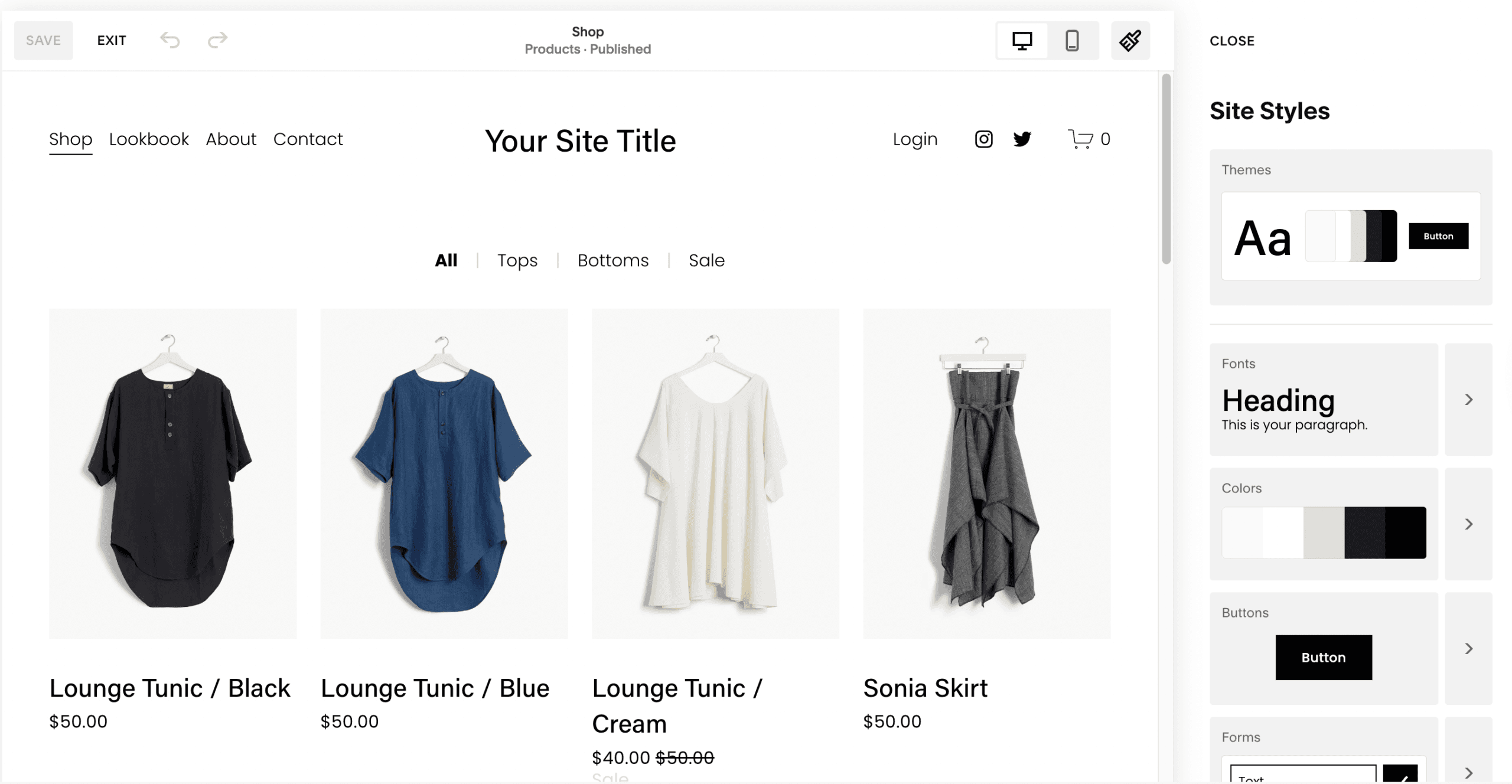
This is where Squarespace feels strongest. The editor is visual, the templates are polished, and it is easy to make a site look clean without thinking too much about layout structure. For photographers, designers, restaurants, coaches, local businesses, and personal brands, that matters.
Shopify is more structured. You build pages with sections and blocks instead of freely moving everything around. That can feel less creative at first, but it helps keep product pages, checkout pages, and mobile layouts consistent. For ecommerce, structure is not always a downside.
Ecommerce features and product management
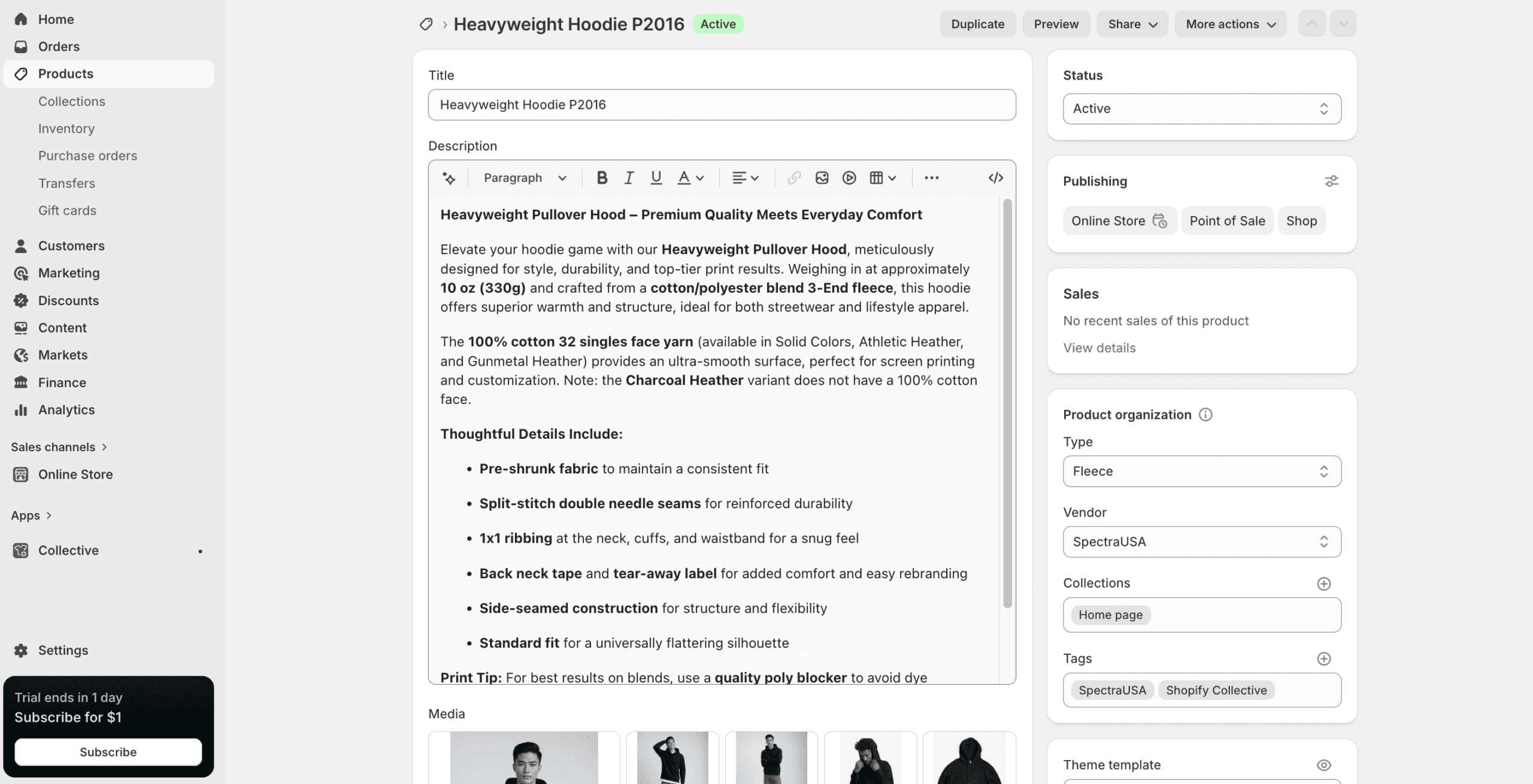
For ecommerce, Shopify is the safer long-term choice. It is built around products, orders, checkout, sales channels, staff access, inventory, payment settings, shipping labels, discounts, and app-based growth. If you plan to add more products, test upsells, sell across channels, or run paid ads, Shopify gives you more room.
Squarespace can still sell products, services, memberships, and digital products depending on your plan. It is not bad for ecommerce. It just feels better for smaller catalogs where the website, brand story, and visuals matter as much as the store backend.
Shopify vs Squarespace pricing and fees
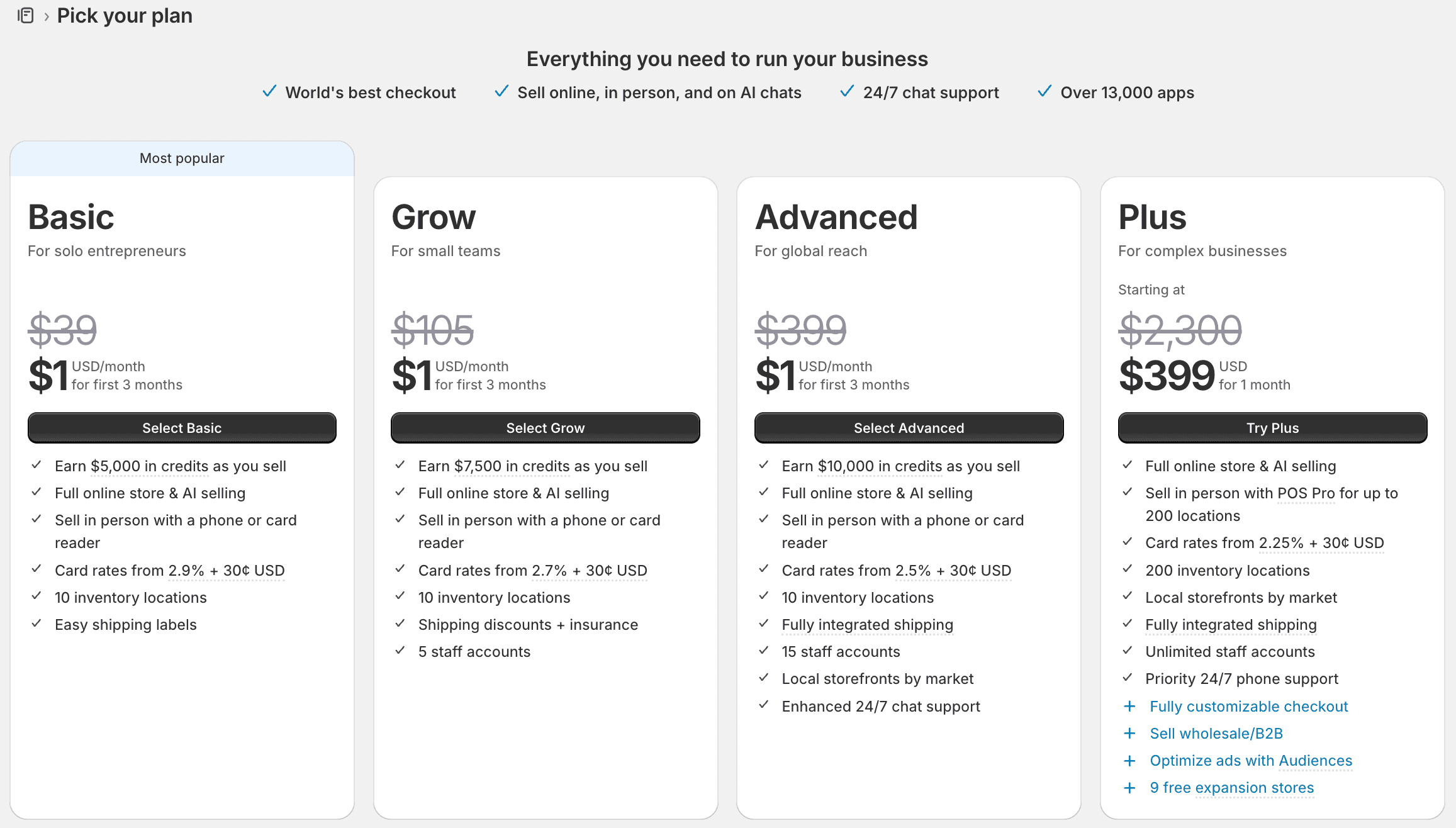
Squarespace usually looks cheaper upfront. Shopify usually costs more as a store platform, but you are paying for a deeper ecommerce backend. The mistake is only comparing monthly prices. You also need to factor in transaction fees, payment processing, apps, and whether you will need advanced shipping or sales tools later. See the full breakdown in the Shopify pricing plans guide, or check how to get the Shopify free trial before committing.
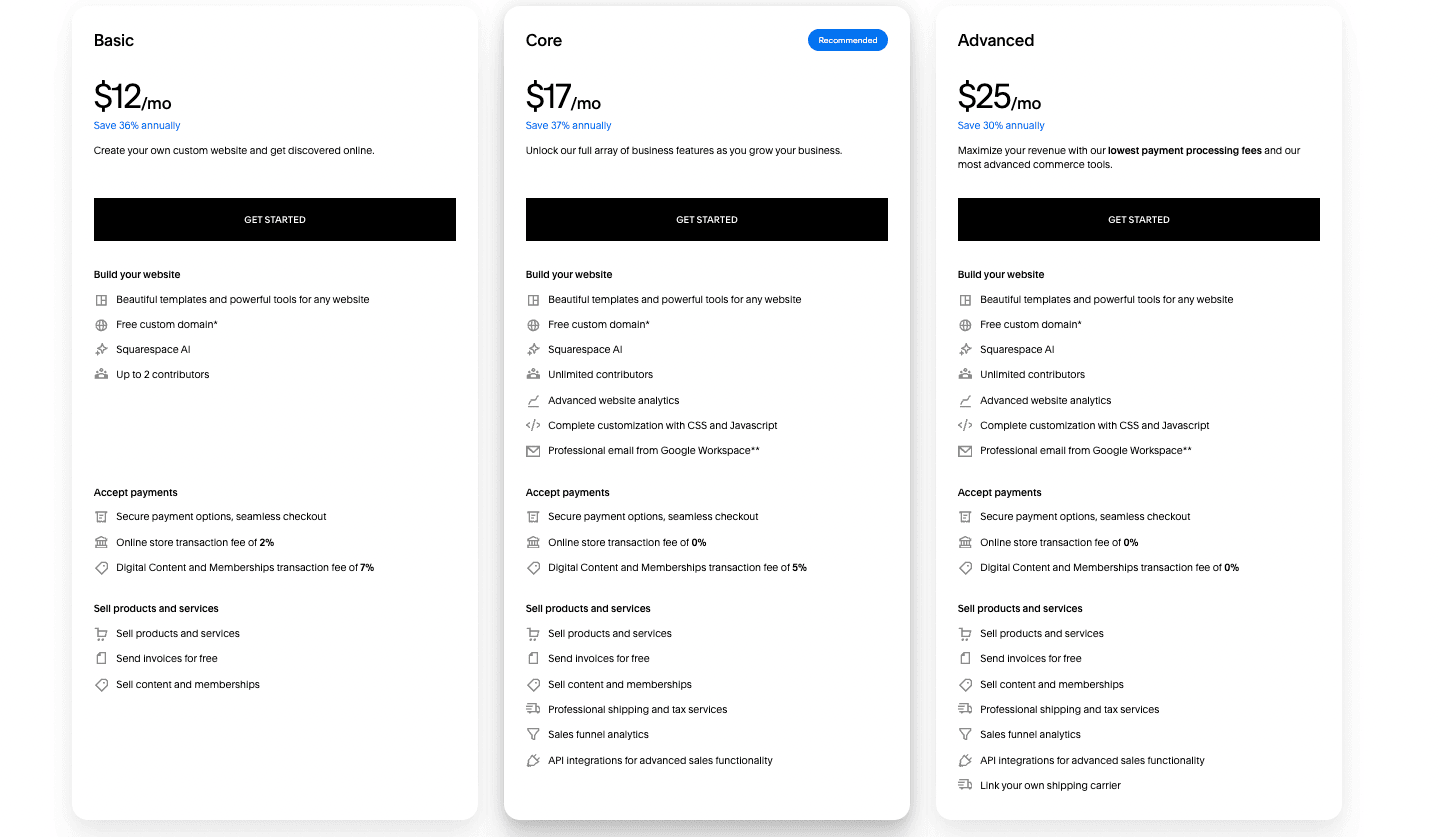
| Cost factor | Shopify | Squarespace |
|---|---|---|
| Plans (monthly billing) | Basic $39 · Grow $105 · Advanced $399 | Basic $16 · Core $23 · Plus $39 · Advanced $99 (annual) |
| Transaction fees | None with Shopify Payments; 0.2%–2% extra with third-party gateways | 2% on Basic plan sales; waived from Core plan upward |
| Trial / deal | 3-day free trial, then currently $1/month for 3 months | 14-day free trial |
| Apps | More options; costs can add up | Smaller ecosystem; simpler cost structure |
| Best value | Stores planning to grow | Design-first websites and lighter selling |
Apps, integrations, and scaling
Shopify’s app ecosystem is the biggest difference once your store grows. You can add apps for reviews, subscriptions, upsells, dropshipping, loyalty programs, email marketing, analytics, shipping, wholesale, B2B, and store automation. That flexibility matters when your business changes.
Squarespace has useful integrations, but the ecosystem is much smaller. That is fine if you want a clean website with a few products or services. It becomes limiting if you want advanced ecommerce workflows, deeper fulfillment tools, or a specific growth stack.
SEO, blogging, and marketing
Both Shopify and Squarespace can rank in Google. Squarespace is good for clean pages, visual content, portfolios, and simple blogs. Shopify is stronger when the SEO goal is tied to ecommerce: product pages, collections, structured store navigation, checkout, apps, product reviews, and conversion-focused landing pages.
For a content-heavy business with a few products, Squarespace can make sense. For a store where search traffic should lead to product sales, Shopify is usually the better foundation. The platform does not replace good content, backlinks, or product-market fit — but it does affect how easy it is to manage ecommerce SEO at scale.
Shipping, POS, and sales channels
If you sell physical products, Shopify has the advantage. It is built for order management, shipping labels, inventory locations, point-of-sale selling, and sales across online and in-person channels. That is useful even for small brands, because shipping and order handling get painful quickly once volume grows.
Squarespace can handle simpler selling setups, especially if you are taking a small number of orders or selling alongside a portfolio, menu, booking page, or service website. But if you know shipping, POS, or multi-channel sales will become important, Shopify gives you more room before you need to migrate.
My recommendation after comparing both
After testing and using both Shopify and Squarespace for various websites, I must say I like both platforms, but for completely different purposes. Shopify is my go-to platform for any kind of ecommerce business, as the number of integrations, apps, and custom options is unmatched. Squarespace starts slightly cheaper and is my #1 option for any kind of smaller local business or personal brand, especially in a more creative sector. Both platforms have solid customer support and clean interfaces, so you really can’t go wrong with either choice. The main question is what you’re actually building, because Shopify rewards you the more products you add, while Squarespace rewards you the more time you spend on design. Pick the one that matches the kind of work you want to do every day.
Which should you choose?
Choose Shopify if you want to build a product business. It is the better pick for physical products, dropshipping, print-on-demand, subscriptions, paid ads, inventory, shipping, POS, multi-channel selling, and growth. You may pay more than Squarespace, but you are buying an ecommerce system, not just a website builder.
Choose Squarespace if your website is mainly about design, content, appointments, services, photography, restaurants, portfolios, or a small product catalog. It is easier to make a beautiful website quickly, and that matters more than Shopify’s deeper commerce stack if ecommerce is not the main business.
- Pick Shopify if: your main goal is online selling and you want room to scale.
- Pick Squarespace if: your main goal is a polished website and ecommerce is secondary.
- Still unsure? Start by testing Shopify if products are central to your plan. Start with Squarespace if the website is mostly a portfolio, service page, or brand presence.
Test Shopify before committing
Build the store first, compare the dashboard, and decide before paying full price.
Frequently asked questions
Is Shopify better than Squarespace for ecommerce?
Yes, Shopify is usually better for ecommerce if your main goal is to sell products, manage inventory, add apps, ship orders, and scale a store. Squarespace can sell products too, but it works better when ecommerce is only one part of a design-focused website.
Is Squarespace cheaper than Shopify?
Squarespace can look cheaper upfront, especially for simple websites. The real cost depends on the plan, payment processing, transaction fees, and whether you need advanced ecommerce features. Shopify usually costs more at the base plan level, but includes a deeper ecommerce backend.
Can I sell products on Squarespace?
Yes, Squarespace supports selling physical products, services, digital products, memberships, and subscriptions depending on the plan. It works well for smaller catalogs, creators, service businesses, and design-led brands.
Is Shopify or Squarespace better for SEO?
Both can rank in Google. Squarespace is strong for simple websites and blogs, while Shopify is stronger for ecommerce SEO because product pages, collections, apps, checkout, and store structure are built around selling online.
Which is better for beginners, Shopify or Squarespace?
Squarespace often feels easier for visual site building because the editor is more direct. Shopify can feel more structured, but it is easier for beginners who specifically want to launch an online store and manage products, payments, shipping, and orders in one dashboard.
Should I use Shopify or Squarespace for dropshipping?
Use Shopify for dropshipping. Shopify has a much larger app ecosystem, stronger product management, better order workflows, and more room to grow. Squarespace is better for simple stores, not advanced dropshipping operations.
Related next step
Next: read the complete Shopify guide, compare the Shopify pricing plans, check the Shopify vs WordPress comparison, or browse the current software deals.